Chapter 01 of 05 · Discover BARMM
How BARMM came to be
Six centuries, one unbroken argument about who governs the Bangsamoro — told through the moments that changed the answer.
What followed was a long cycle of deals that fell short. The Tripoli Agreement in 1976 promised autonomy and did not deliver it; the first autonomous region, set up at the end of the 1980s, arrived with powers thinner than the ones being demanded; a final peace deal with the MNLF in 1996 left the underlying question open. In 2008 an agreement on ancestral domain was struck down by the Supreme Court before it could be signed — which is why the map of what it would have covered is worth looking at.
The settlement that held was built in stages: a framework agreement in 2012, a comprehensive one in 2014, and a law in 2018. That law is the Bangsamoro Organic Law. It was ratified in plebiscites in 2019, and it did three things at once — it abolished the ARMM, drew the new region by asking each area whether it wanted to be in it, and created a parliament to govern what the vote produced.
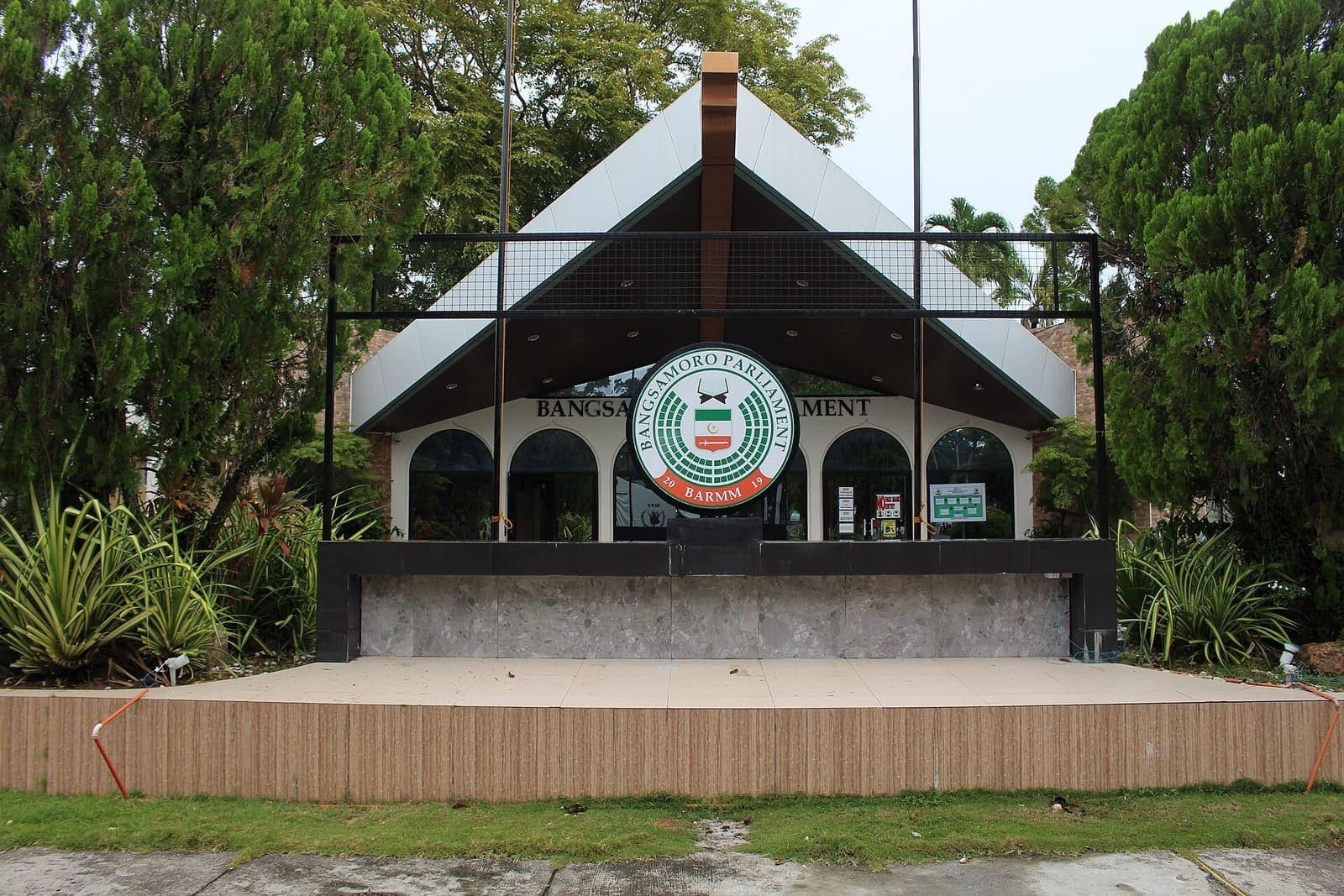
The parliament that has governed since is a transitional one, appointed rather than elected, and it has spent the years since ratification building ministries, codes and budgets from very little. The first regular election is the moment that ends: the region stops being administered by an interim body and starts being governed by one the voters chose.
From the struggle to BARMM.
17 moments that shaped the Bangsamoro — from centuries-old sultanates to the first regular parliamentary election.
01 / 17
Before 1565
Sultanates and self-rule
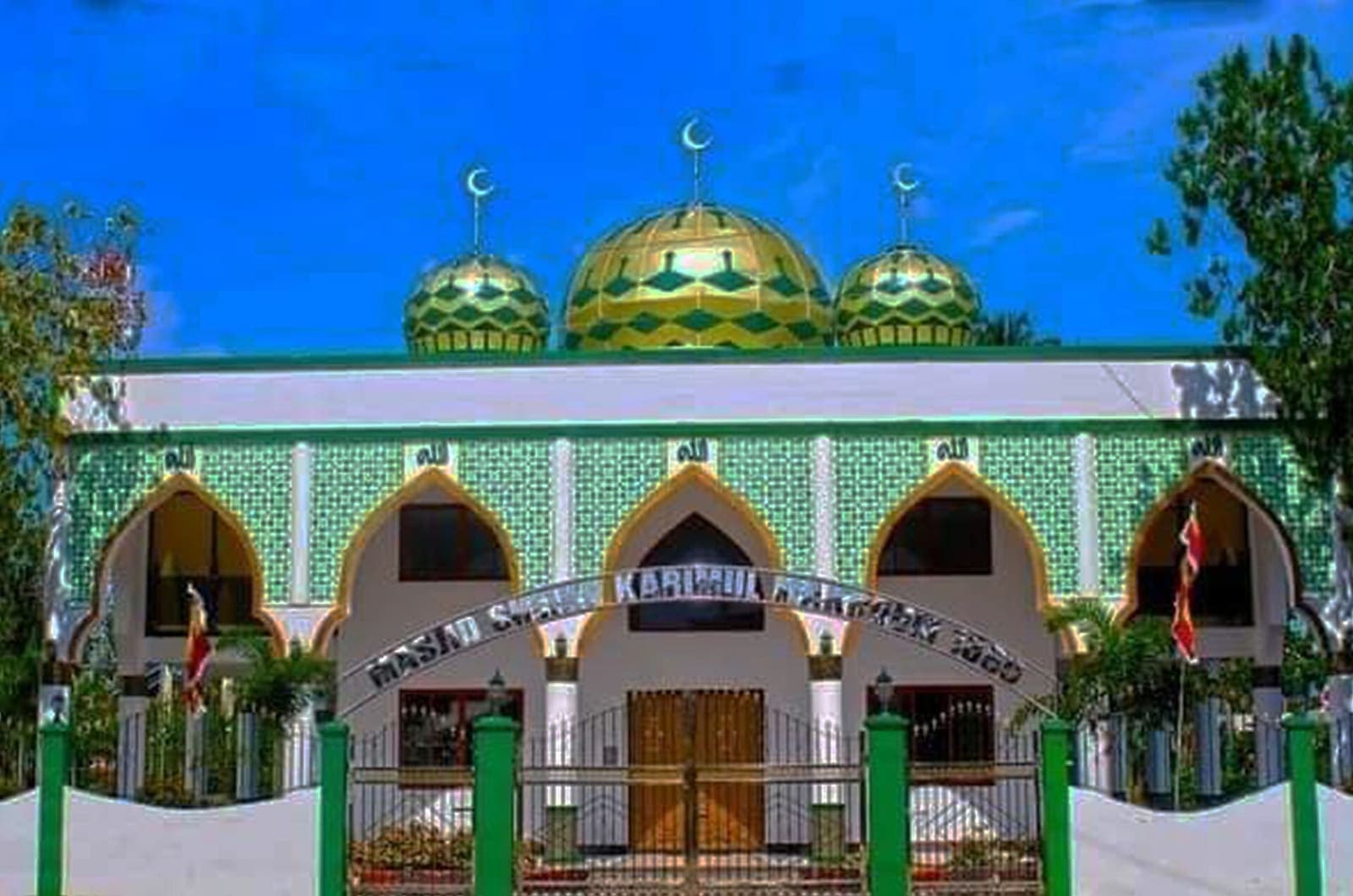
Long before Manila became a colonial capital, the peoples of Mindanao and the Sulu archipelago governed themselves. Islam arrived through trade and missionaries from the 13th and 14th centuries, and by the 15th century powerful sultanates had formed — among them the Sultanate of Sulu (traditionally dated to around 1457) and the Sultanate of Maguindanao. These states ran their own courts, collected tribute, maintained armies and navies, and traded across maritime Southeast Asia — leaving the Bangsamoro a deep memory of sovereignty and self-rule.
Sheik Karimul Makhdum Mosque, Simunul — the oldest mosque in the Philippines, founded 1380.Laila Aripin / Bangsamoro Information Office · Public domain 02 / 17
1565–1898
Three centuries of resistance
When Spain colonized the northern Philippines, it tried again and again to bring the Muslim south under its control — and never fully succeeded. Across more than three centuries, the sultanates fought a long series of campaigns the Spanish called the "Moro Wars," defending their territory, faith, and institutions. That sustained resistance is why the region entered the 20th century with a distinct history, largely unconquered and never integrated into the colonial order on Spanish terms.
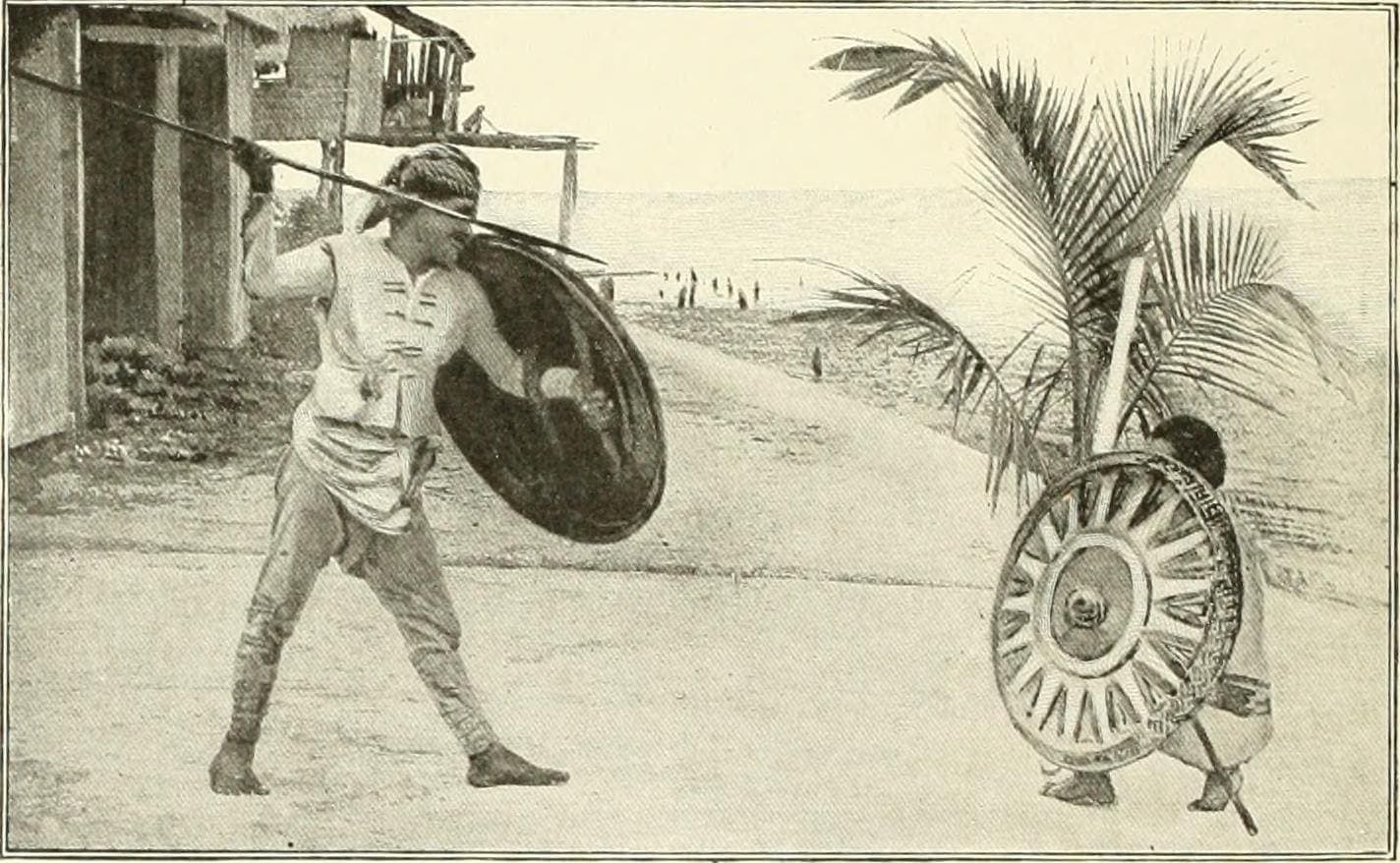
Tausug warriors in full regalia, from a 1899 volume on the Philippine Islands.Internet Archive Book Images · No known copyright restrictions 03 / 17
1899–1946
Annexation under American rule
After Spain ceded the Philippines to the United States in 1898, American forces moved to place the Moro territories under a single Philippine administration — through military campaigns in Sulu and Lanao, and later through civil governance and public-land laws. Homesteading and resettlement policies began opening Moro lands to migrants from the north. These decades folded the sultanate territories into a unitary state without the consent of their peoples, planting grievances over land, identity, and self-government that would shape the century ahead.
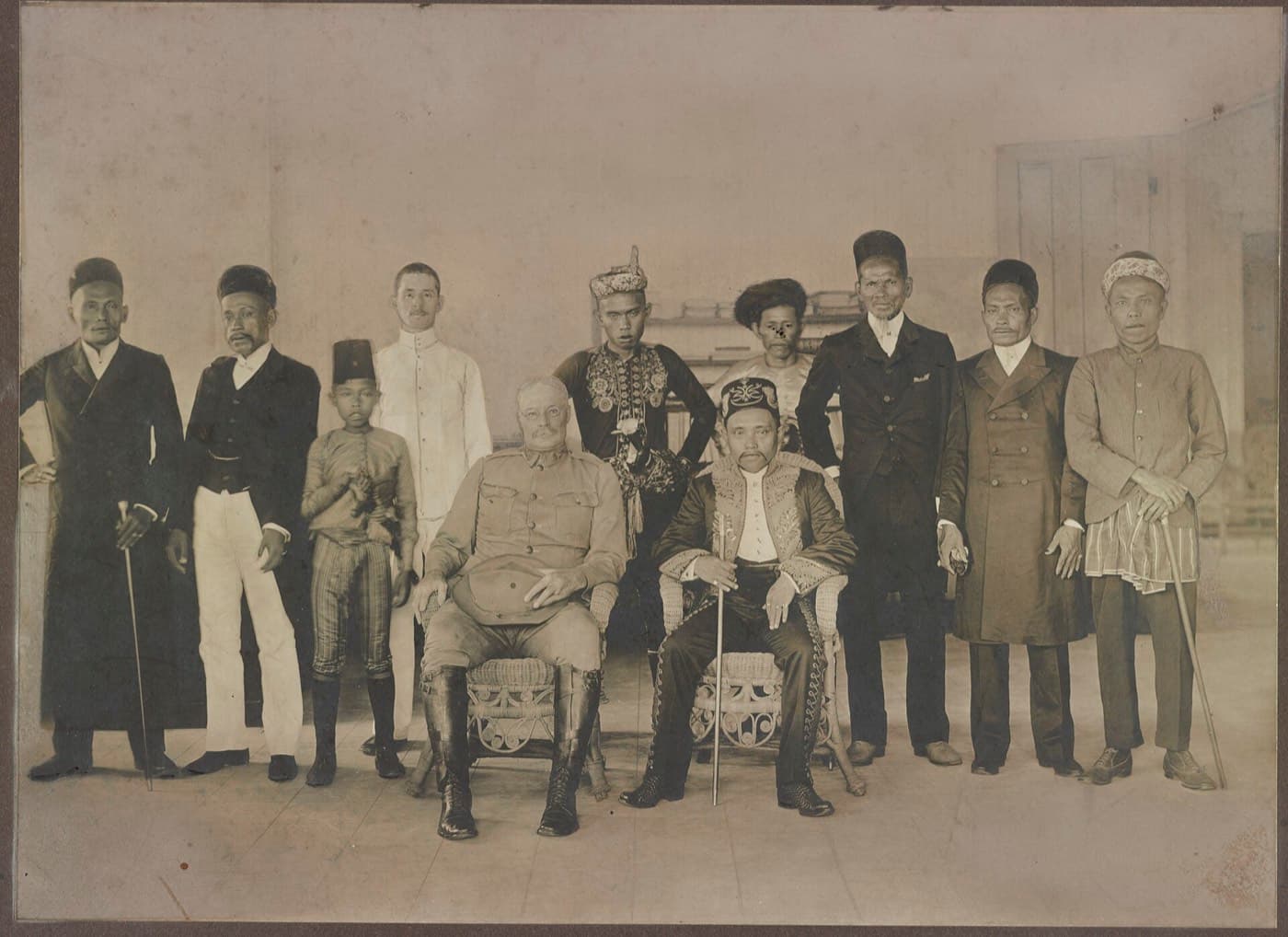
Major Hugh Scott, American military governor of Sulu, seated beside Sultan Jamalul Kiram II with local officials, 1905.Library of Congress, Prints & Photographs Division · Public domain 04 / 17
1946–1967
Marginalization in the homeland
Philippine independence in 1946 did not resolve those grievances. Resettlement programs kept moving settlers into Mindanao, steadily shifting land ownership and the demographic balance of once majority-Moro provinces. Political and economic power concentrated elsewhere, and many Moro communities came to feel like a marginalized minority in their own historic homeland — a sense of dispossession that made the coming decade combustible.
05 / 17
1968
The Jabidah massacre
In March 1968, reports emerged that Moro military trainees had been killed on Corregidor Island in a secret operation later known as the Jabidah incident. The details remain contested to this day, but the story struck a nerve. It became a powerful symbol of how little the state seemed to value Moro lives, and a catalyst for a new, more organized Bangsamoro political consciousness — pushing long-simmering grievances into open mobilization.

Corregidor Island, where Moro trainees were reported killed in March 1968 — the Jabidah incident. Photographed 2020.Mercyreyes888 · CC BY-SA 4.0 06 / 17
1969–1972
The MNLF takes up the cause
Out of that awakening, Nur Misuari and other young activists founded the Moro National Liberation Front (MNLF), which took shape around 1969 to 1972. The MNLF reframed the struggle as one for Bangsamoro self-determination and launched an armed campaign that escalated sharply after martial law was declared in 1972. By the mid-1970s the fighting in Mindanao had grown into one of the largest internal conflicts the country had seen.
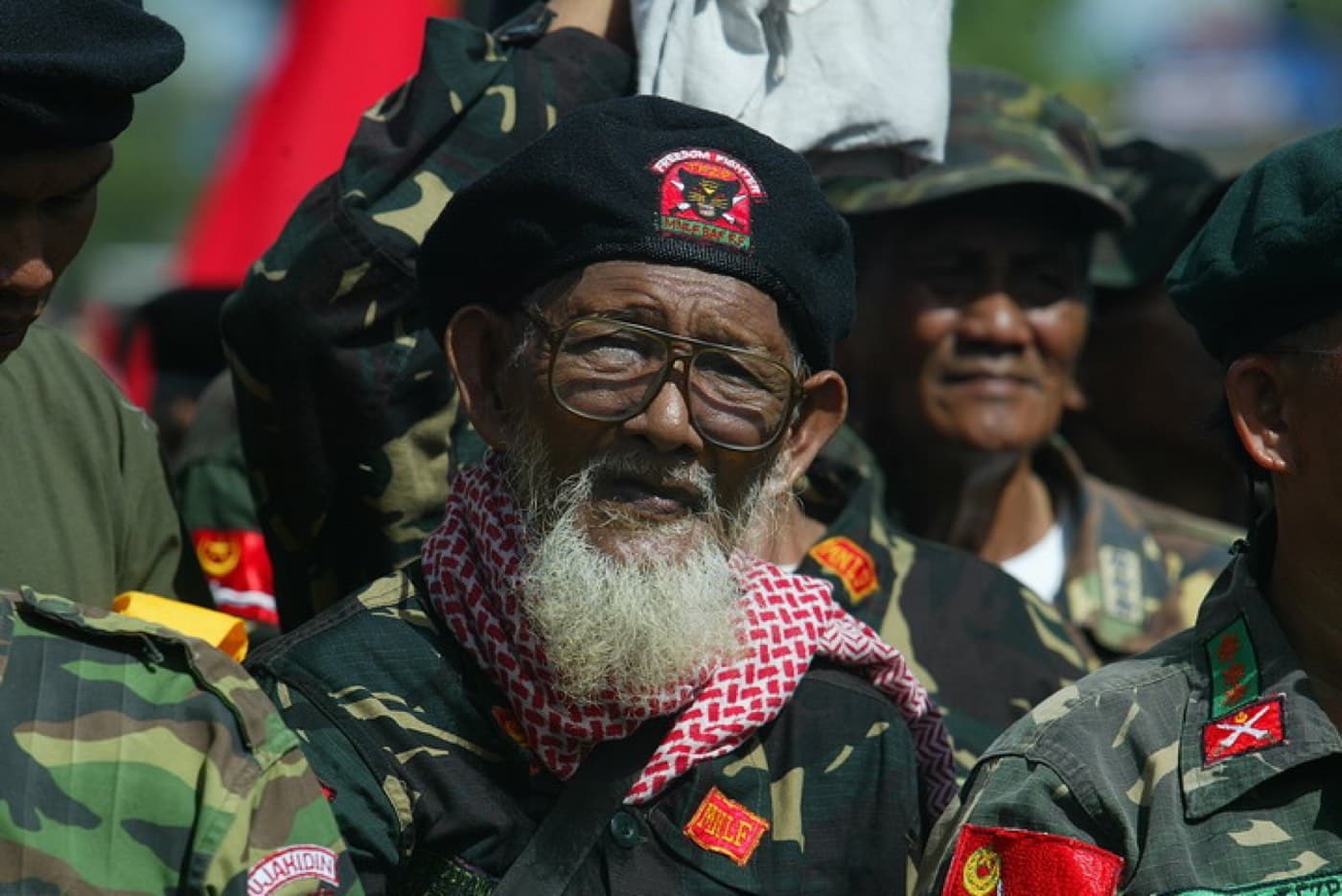
Veterans of the Moro National Liberation Front in uniform, photographed in 2009.Keith Bacongco · CC BY 2.0 07 / 17
1976
The Tripoli Agreement
With the Organization of Islamic Cooperation mediating and Libya hosting, the government and the MNLF signed the Tripoli Agreement in December 1976. It envisioned autonomy for a Bangsamoro region spanning 13 provinces. But the two sides disagreed sharply over how to implement it — including a plebiscite the MNLF rejected — so the agreement was never fully carried out and the fighting resumed.
08 / 17
1977–1984
The MILF emerges
The stalled peace and disagreements over strategy, ideology, and religious direction split the movement. Hashim Salamat led a faction that broke away from the MNLF in the late 1970s and, by 1984, formally organized as the Moro Islamic Liberation Front (MILF). Emphasizing an Islamic character to the struggle, the MILF grew over the following decades into the largest Bangsamoro armed movement and, eventually, the main counterpart of the government in peace talks.
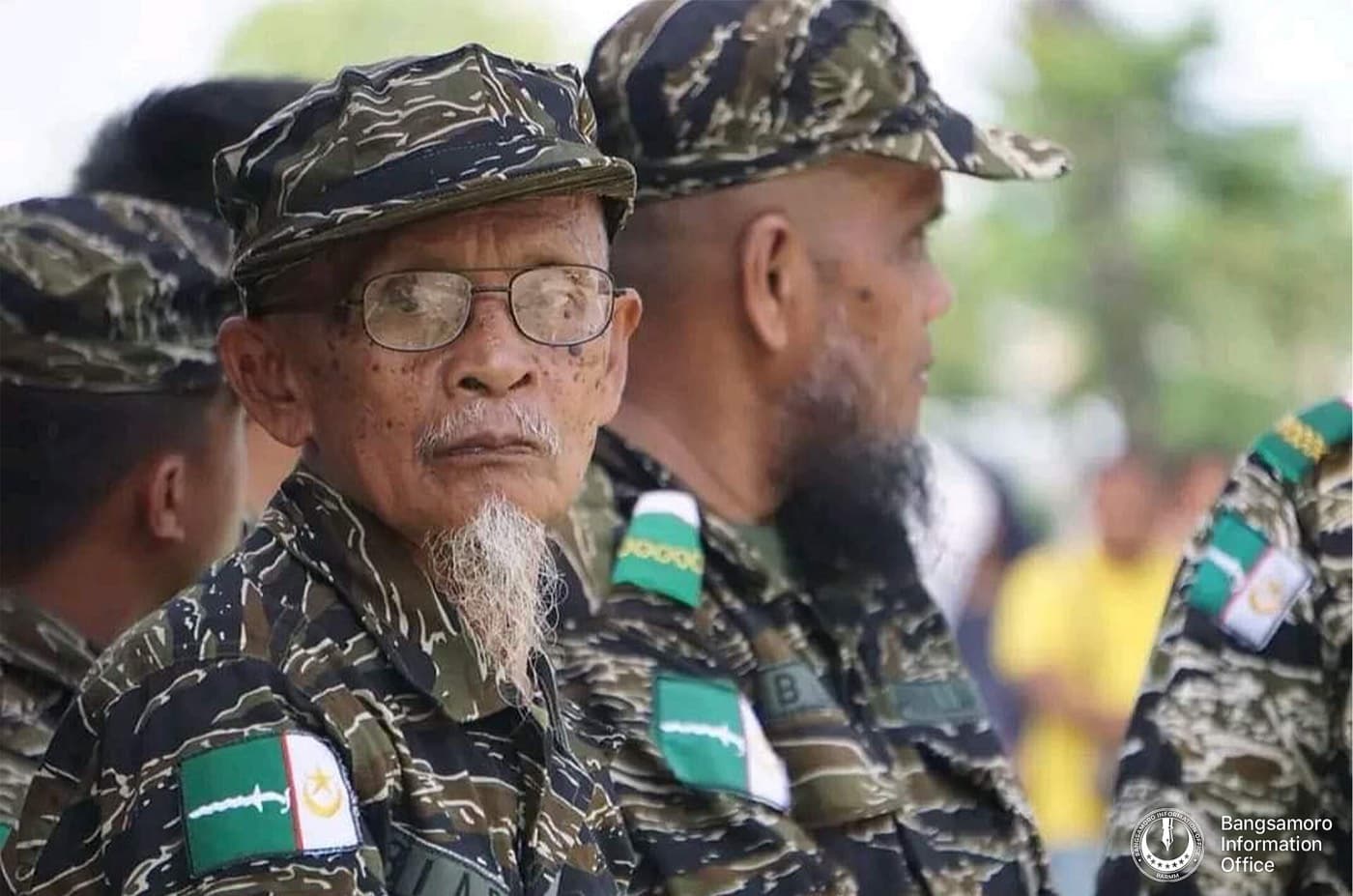
Fighters of the Moro Islamic Liberation Front — the front that formed in 1984 became the largest Bangsamoro armed movement.Morsid Kadir / Bangsamoro Information Office · Public domain 09 / 17
1989–1990
The first autonomous region
Acting on a mandate in the 1987 Constitution, Congress passed Republic Act 6734 in 1989 to create the Autonomous Region in Muslim Mindanao (ARMM). A plebiscite that year decided which areas would join, and only four provinces initially voted in. Inaugurated in 1990, the ARMM was the first attempt at Moro autonomy under Philippine law — but many saw it as under-powered and under-funded, falling short of the Tripoli terms.
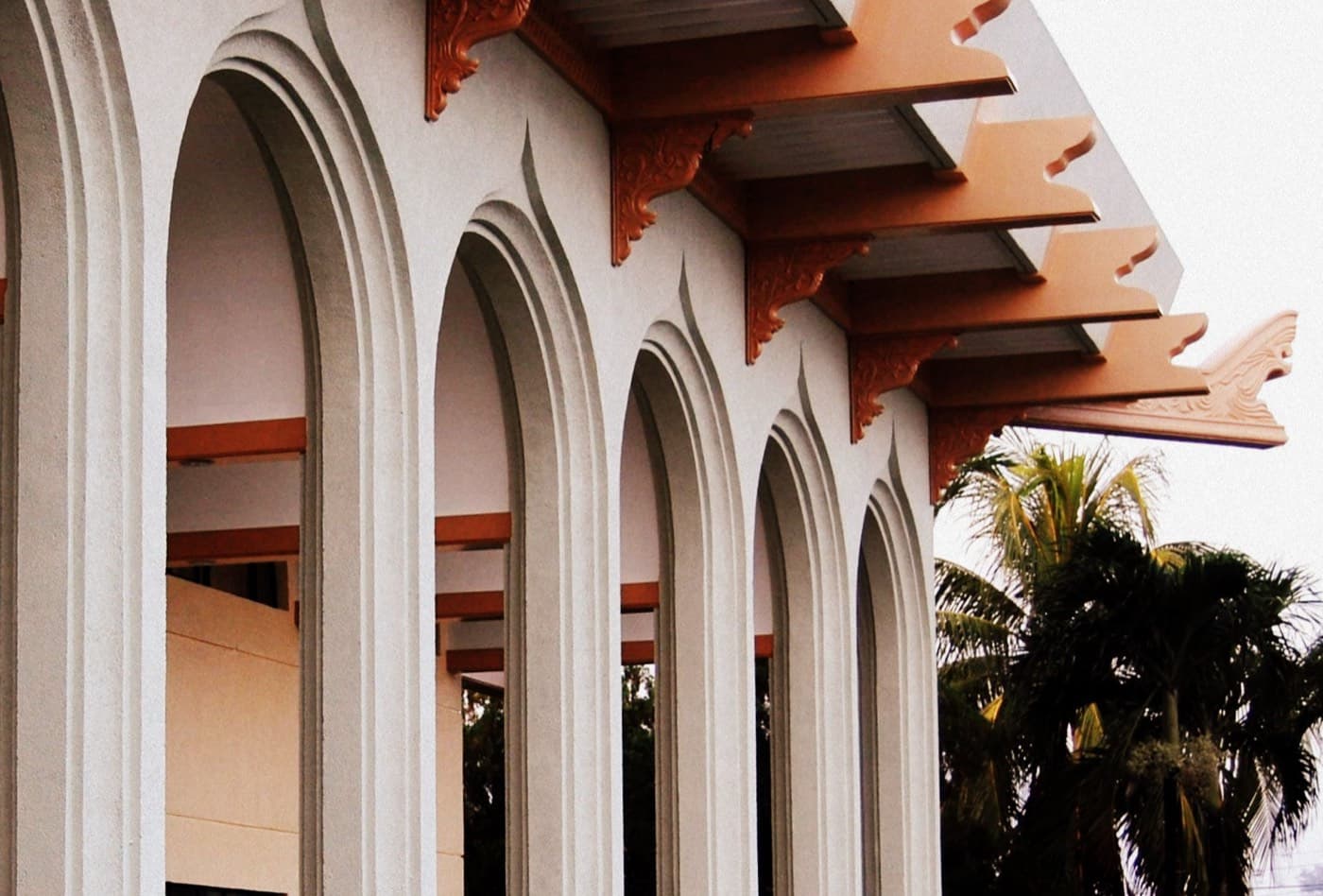
The ARMM Regional Center in Cotabato City — the seat of the region BARMM replaced.Shubert Ciencia · CC BY 2.0 10 / 17
1996
MNLF signs a final peace deal
After years of talks, the MNLF and the government signed the Final Peace Agreement in September 1996, meant to fully implement the 1976 Tripoli accord. Nur Misuari became ARMM governor, and a transitional body was created to steer development in conflict-affected areas. The deal ended the MNLF war — but it did not include the MILF, whose separate track and demands remained unresolved.
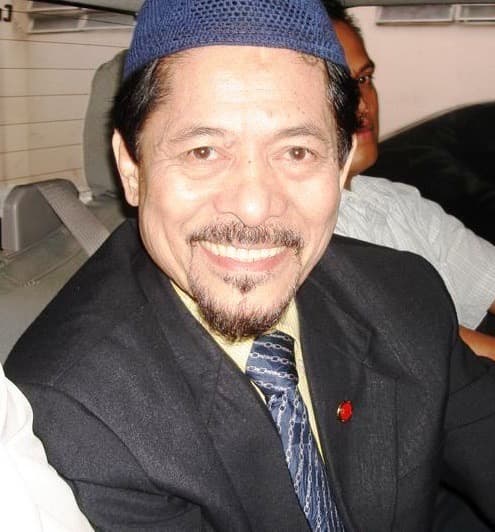
Nur Misuari, who founded the MNLF and became ARMM governor under the 1996 peace agreement. Photographed 2007.Jfkassad · Public domain 11 / 17
2008
A deal struck down
Negotiations with the MILF produced a Memorandum of Agreement on Ancestral Domain (MOA-AD) in 2008, which would have expanded Moro self-governance and territory. Before it could be signed, the Supreme Court halted it and later ruled it unconstitutional. The collapse set off a wave of violence in parts of Mindanao and displaced hundreds of thousands — but it also pushed both sides to rebuild the process on firmer legal ground.
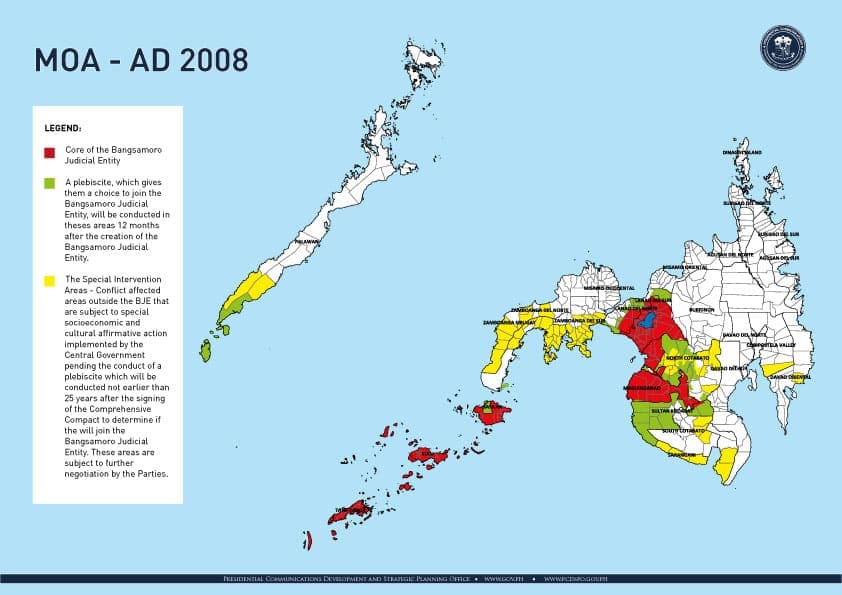
The territory the 2008 MOA-AD would have covered — struck down before it could be signed.Presidential Communications Development and Strategic Planning Office · Public domain 12 / 17
2012
Framework Agreement on the Bangsamoro
In October 2012, the government and the MILF signed the Framework Agreement on the Bangsamoro, a roadmap to replace the ARMM with a new and more autonomous entity to be called the Bangsamoro. It set out the broad architecture — a ministerial form of government, wider powers, and arrangements for sharing wealth and authority — and created a commission to draft the enabling law.
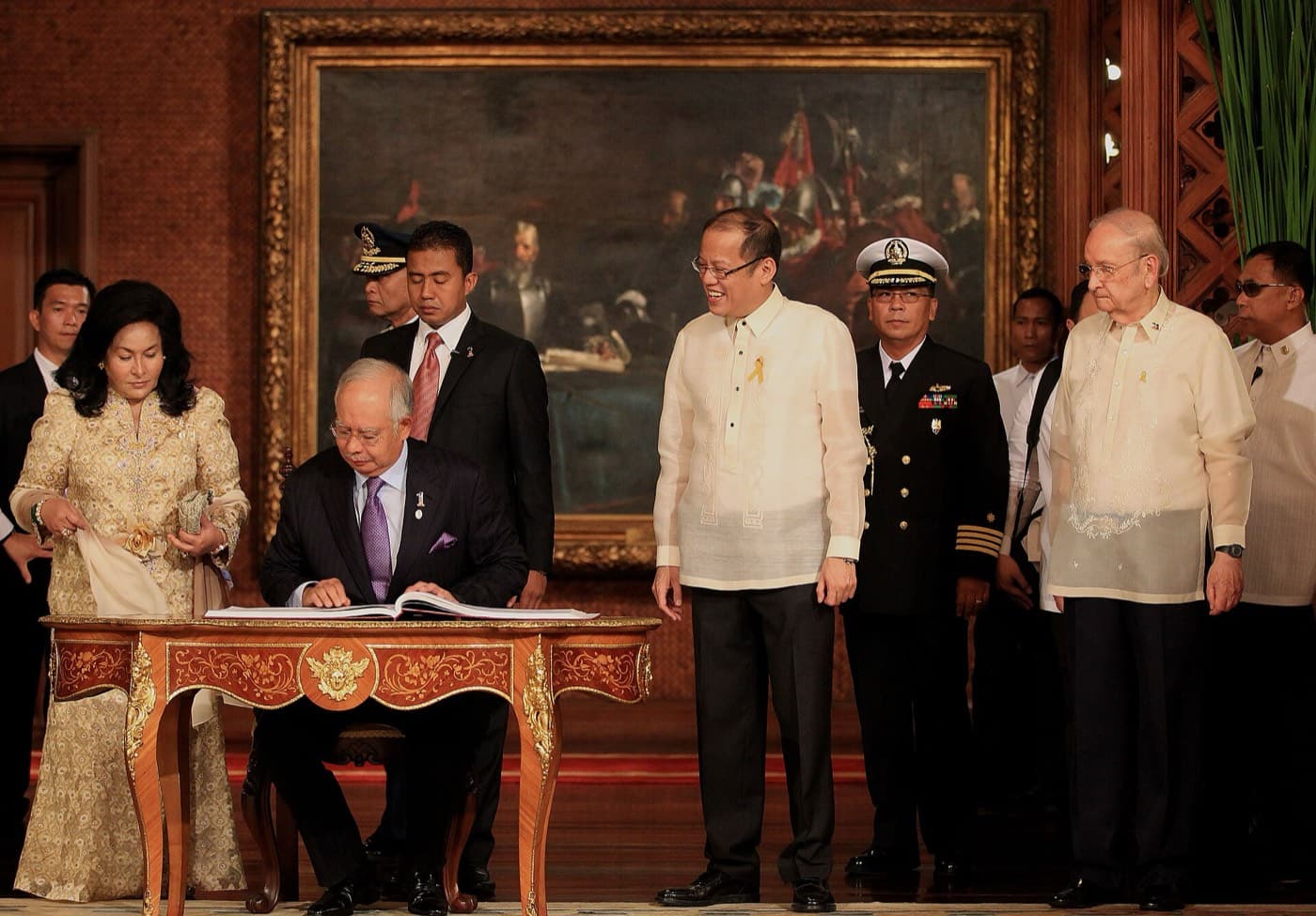
Malaysian Prime Minister Najib Razak at Malacañan Palace on 15 October 2012 — the day the Framework Agreement was signed. Malaysia brokered the talks.Malacañang Photo Bureau · Public domain 13 / 17
2014
The Comprehensive Agreement
On March 27, 2014, the two sides signed the Comprehensive Agreement on the Bangsamoro (CAB), folding the Framework Agreement and its annexes into a single, complete peace accord. The CAB marked the formal end of the decades-long MILF armed struggle and became the political and moral basis for drafting the new organic law that would define the future Bangsamoro.
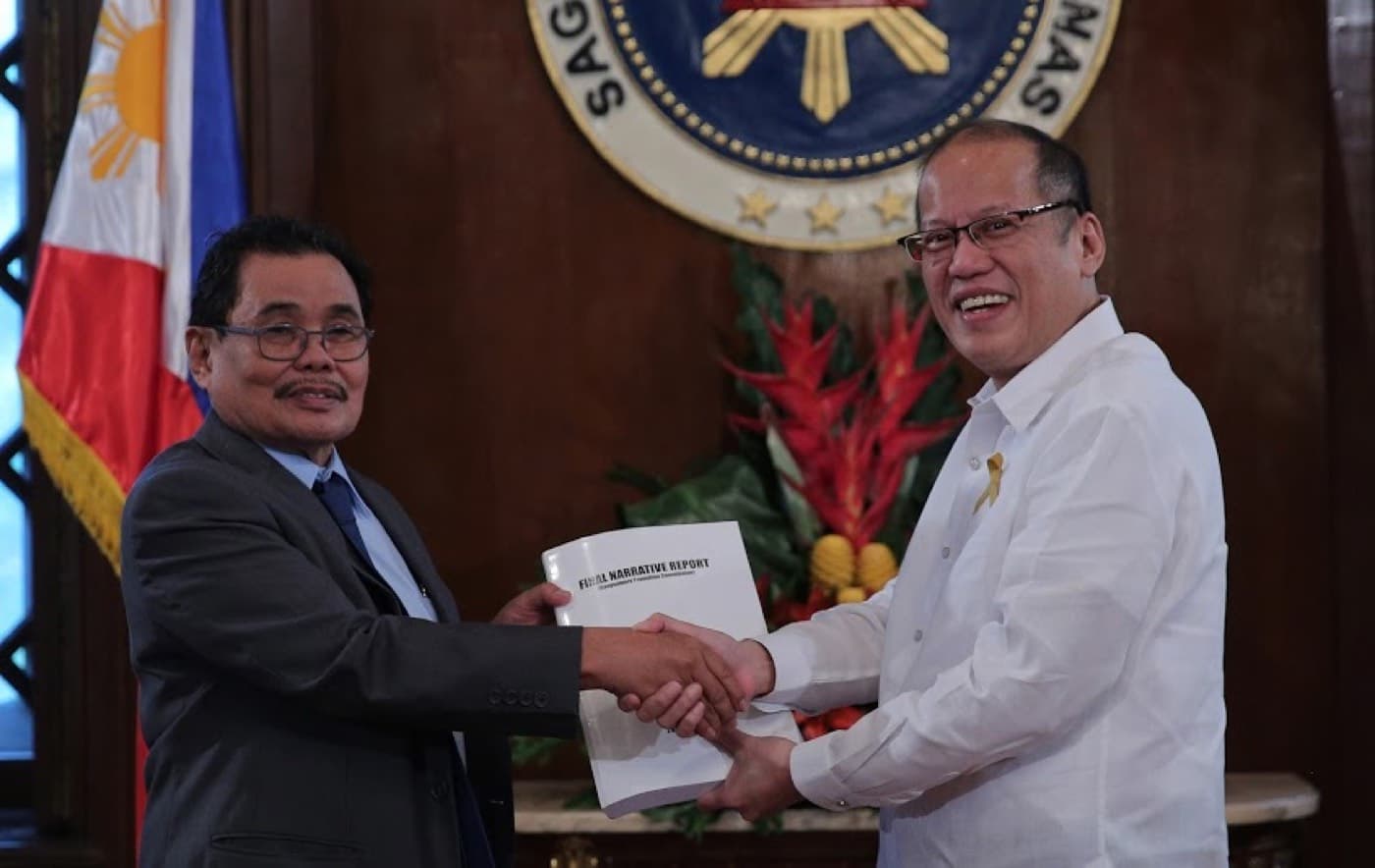
MILF peace panel chair Mohagher Iqbal, who signed the Comprehensive Agreement for the front in 2014, hands President Aquino the transition commission's final report in 2016.Joseph Vidal / Malacañang Photo Bureau · Public domain 14 / 17
2018
The Bangsamoro Organic Law
After an earlier attempt failed, Congress passed and the President signed Republic Act 11054, the Bangsamoro Organic Law, in July 2018. It replaced the ARMM charter and set the legal framework for a new region: an 80-member Bangsamoro Parliament, a ministerial (parliamentary) form of regional government led by a chief minister, and broader fiscal and political powers than the ARMM ever held.
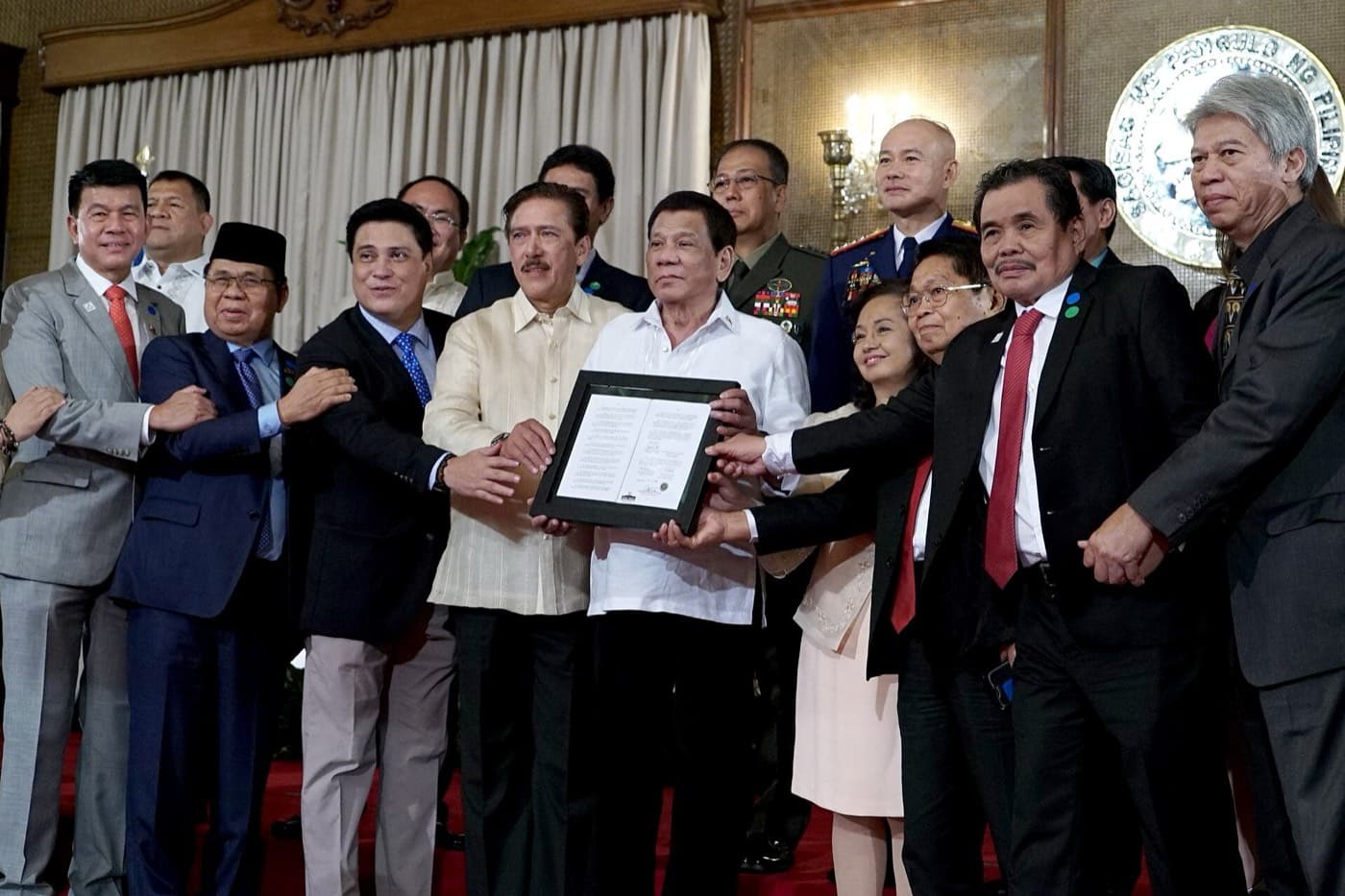
The presentation of the Bangsamoro Organic Law to the MILF, August 2018, a month after Republic Act 11054 was signed.King Rodriguez / Presidential Communications Operations Office · Public domain 15 / 17
2019
BARMM is ratified
The Organic Law went to the people in a two-part plebiscite in January and February 2019. Voters ratified it, and additional areas — including Cotabato City and dozens of towns — voted to join. The Bangsamoro Autonomous Region in Muslim Mindanao (BARMM) formally replaced the ARMM, and the Bangsamoro Transition Authority (BTA) was inaugurated with MILF chair Ahod "Al Haj Murad" Ebrahim as interim chief minister.
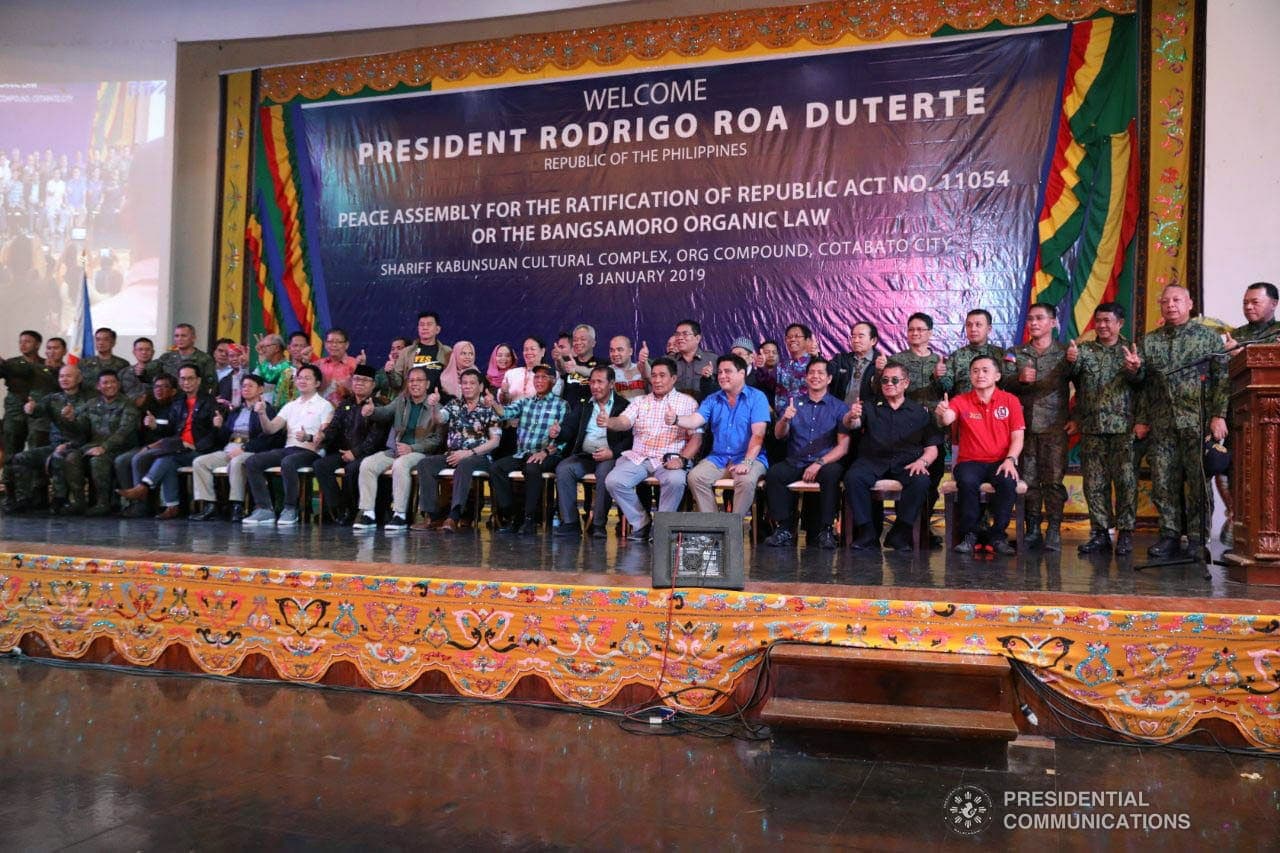
The peace assembly for the ratification of Republic Act 11054, the Bangsamoro Organic Law.Robinson Niñal Jr. / Presidential Communications Operations Office · Public domain 16 / 17
2019–2025
Building the institutions
The transition was about turning a peace agreement into a working government. That meant decommissioning thousands of MILF combatants and their weapons, running normalization and development programs in former conflict zones, and building the machinery of a region almost from scratch — ministries, a bureaucracy, budgets, an electoral code, and an administrative code. Because the task was so large, the transition period was extended to 2025.
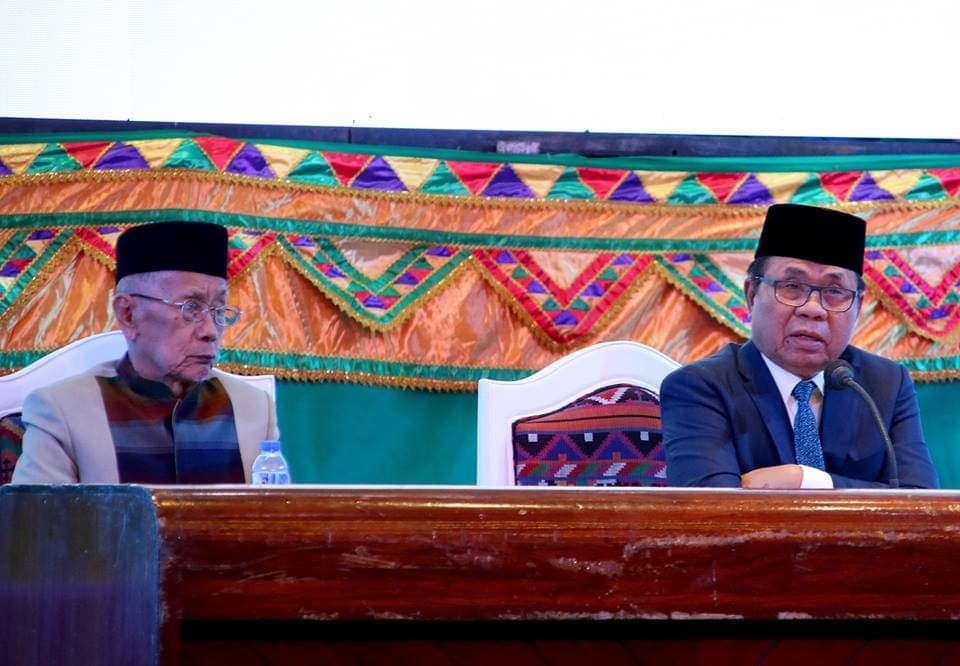
The first session of the Bangsamoro Transition Authority, with the Wali and the interim Chief Minister.Bangsamoro Regional Government · Public domain 17 / 17
September 14, 2026
The first regular election
The transition culminates in the first regular parliamentary elections, set for September 14, 2026. Voters will elect the 80-member Bangsamoro Parliament — through party-representative, single-member district, and reserved-sector seats — and that Parliament will in turn choose the chief minister. It is the moment the Bangsamoro moves from an appointed transition authority to a government its own people have elected.
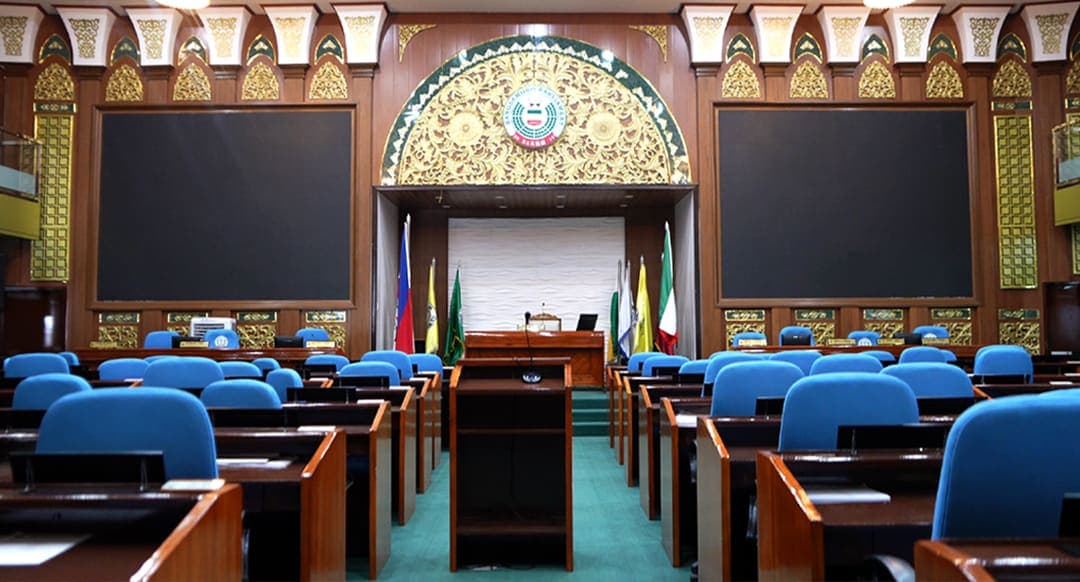
The session hall of the Bangsamoro Parliament — 80 seats when the first regular Parliament is elected.Bangsamoro Parliament · Public domain
Keep it honest
Names change.Figures get revised.
Where this chapter differs from an official page, the official page is right — and the correction is welcome. Send the source and it gets checked against the record.